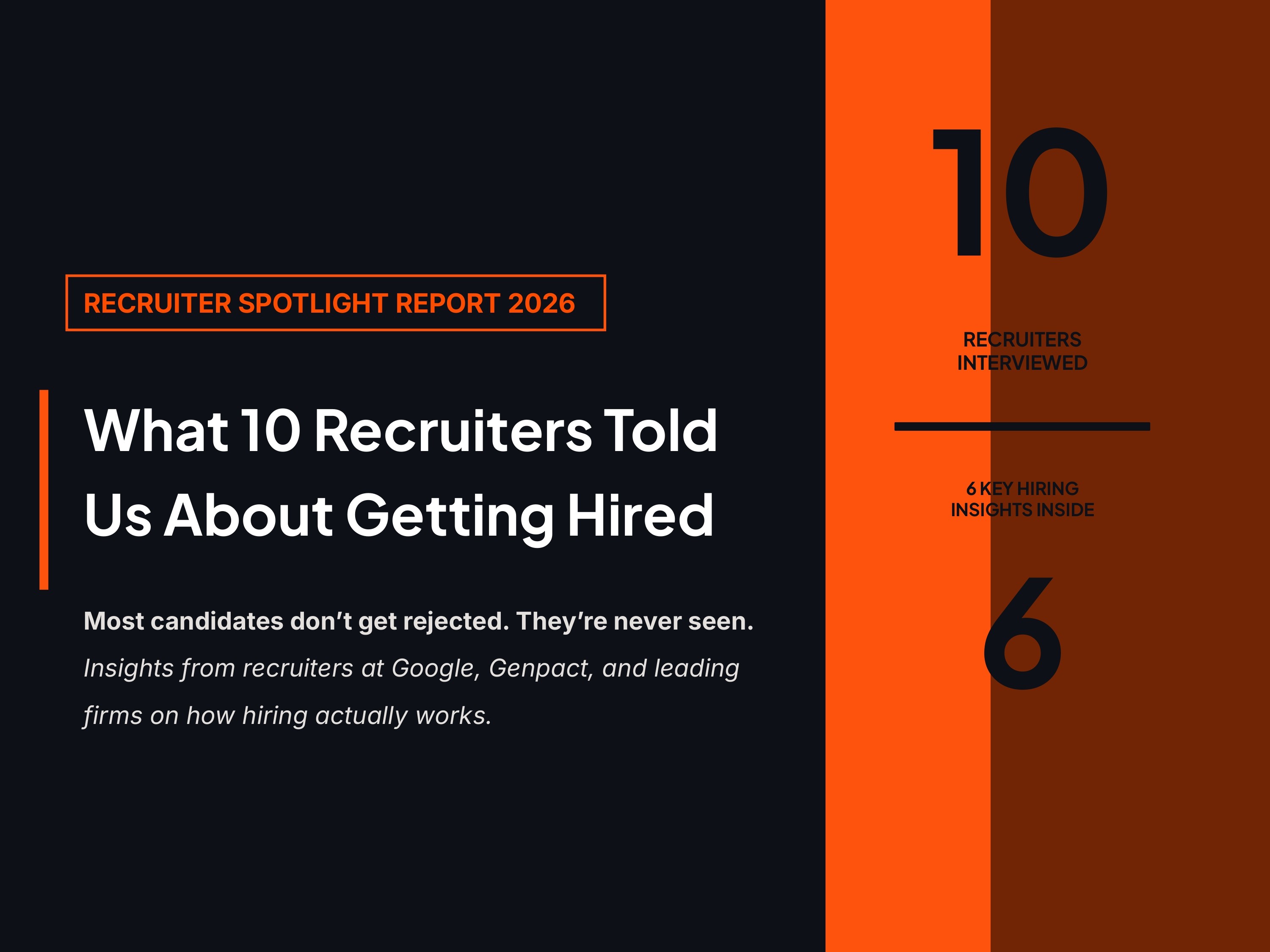
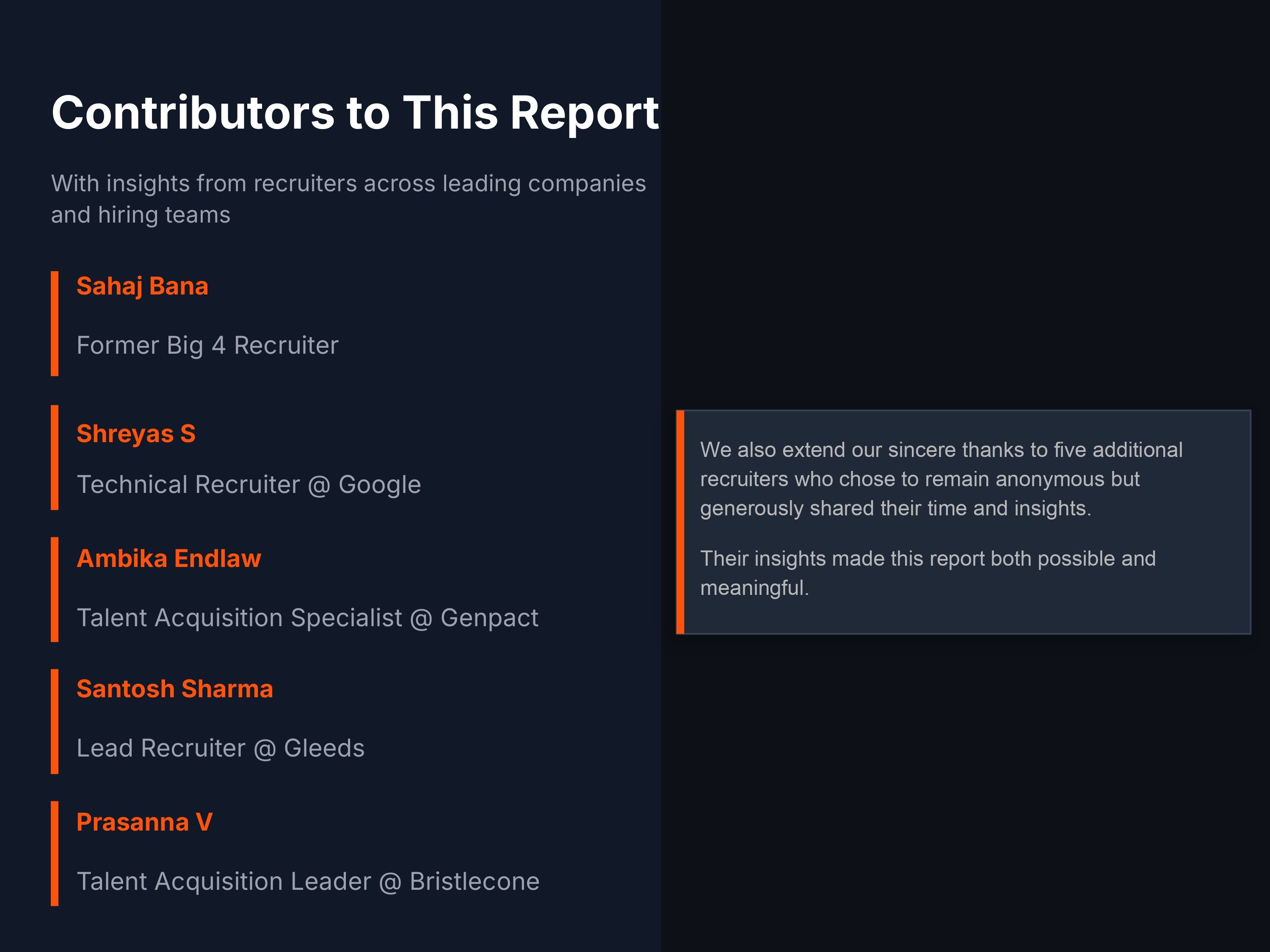
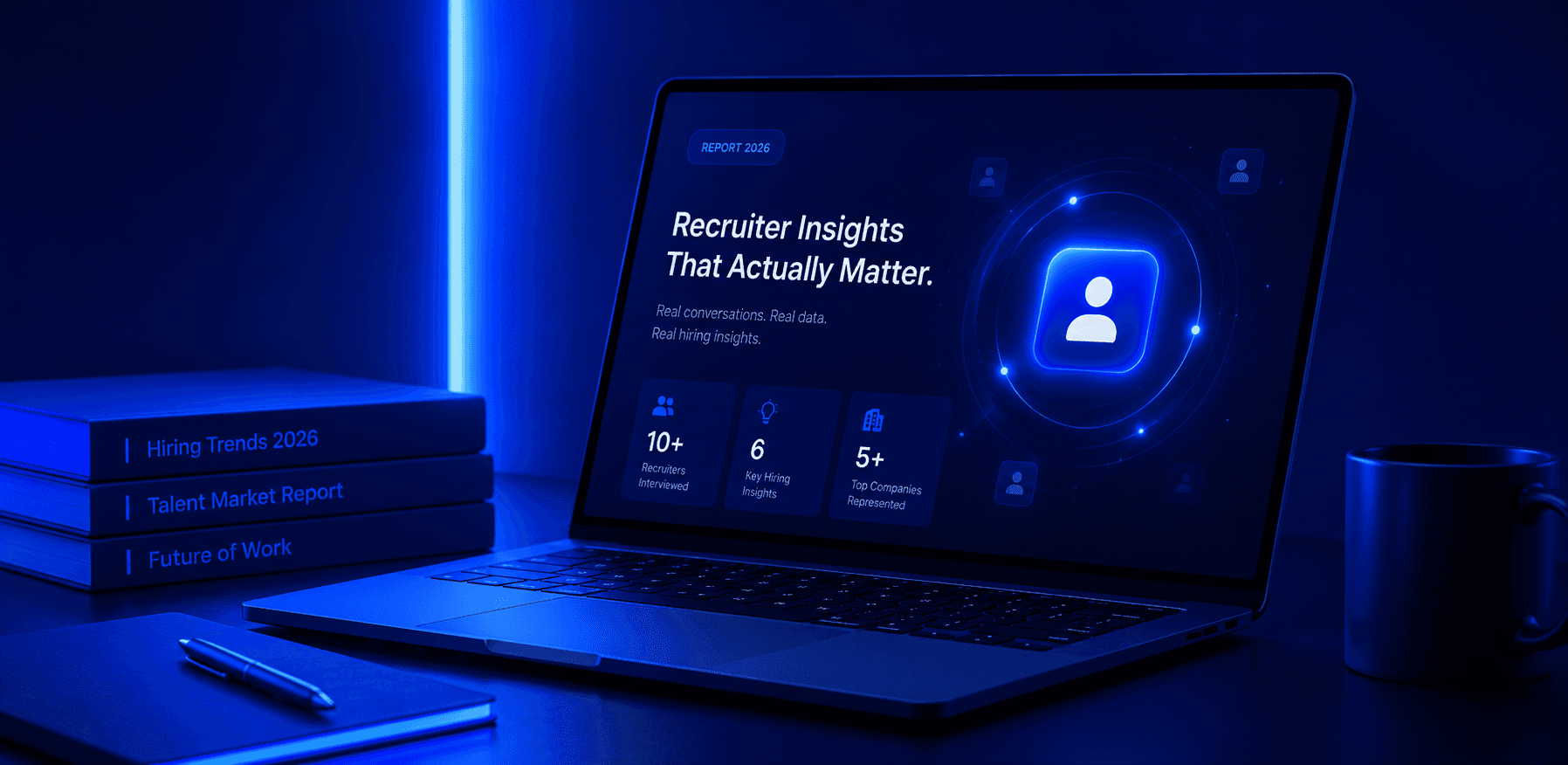
Over the past few months, we spoke with recruiters and hiring leaders across companies including Google, Genpact, Gleeds, Bristlecone, and other leading firms to better understand how hiring actually works today. The insights were surprisingly consistent. Most candidates are not getting rejected because they are unqualified. They are getting filtered out before they are even properly seen.
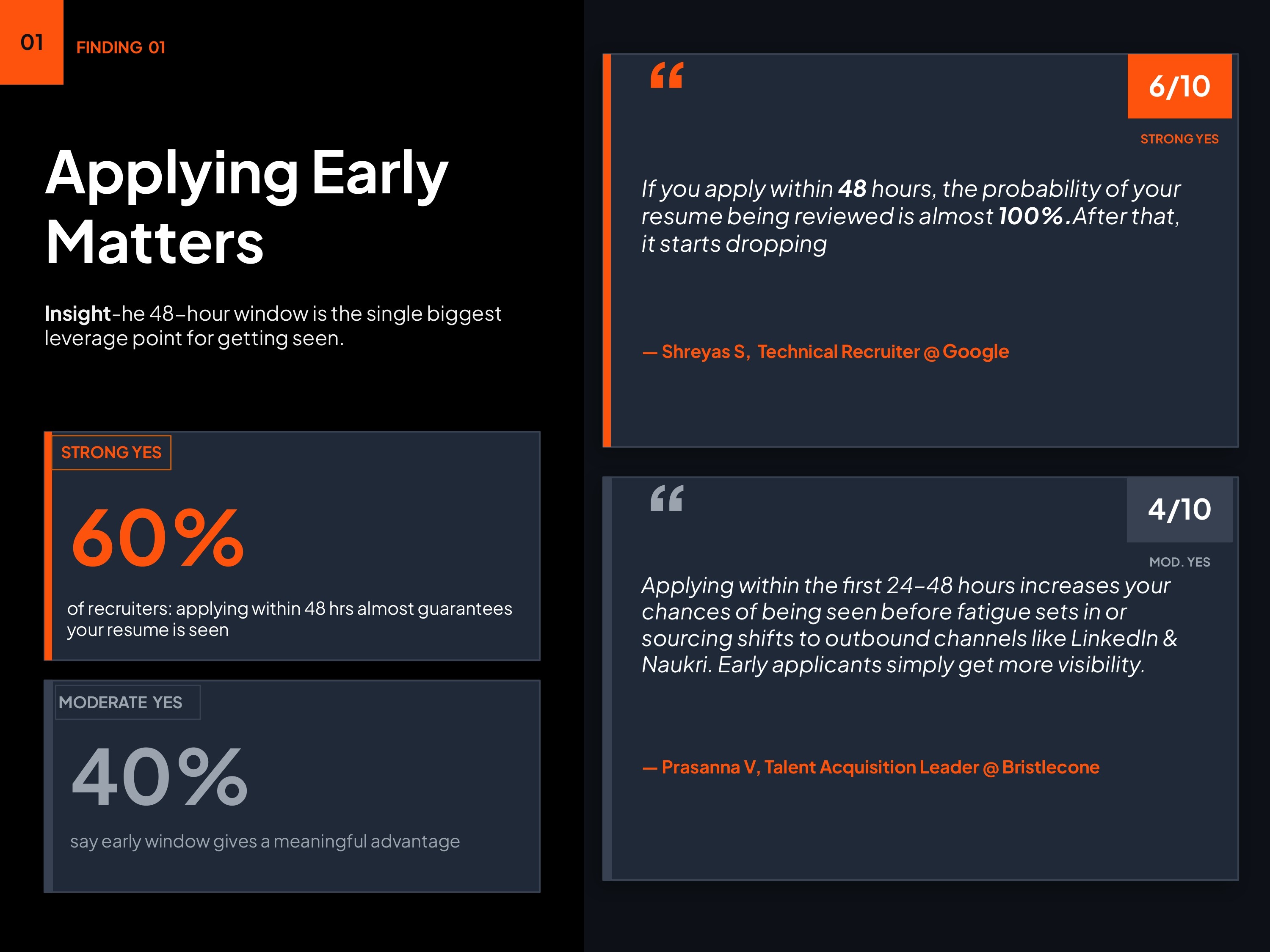
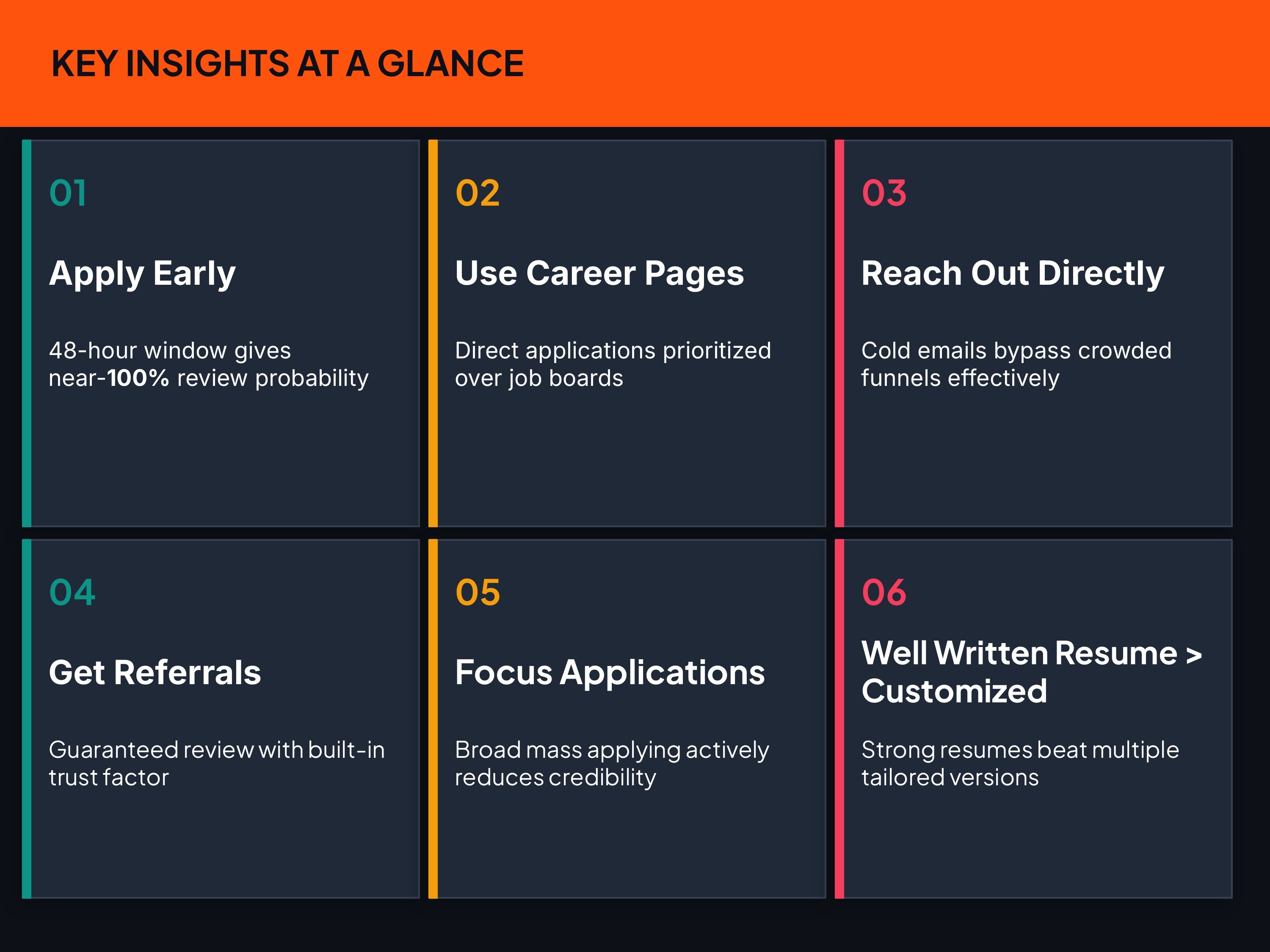
One of the clearest patterns was the importance of timing. Multiple recruiters told us that applying within the first 24 to 48 hours dramatically increases the chances of a resume being reviewed. According to recruiters we interviewed, early applicants are often reviewed before hiring teams shift toward outbound sourcing or referral pipelines.
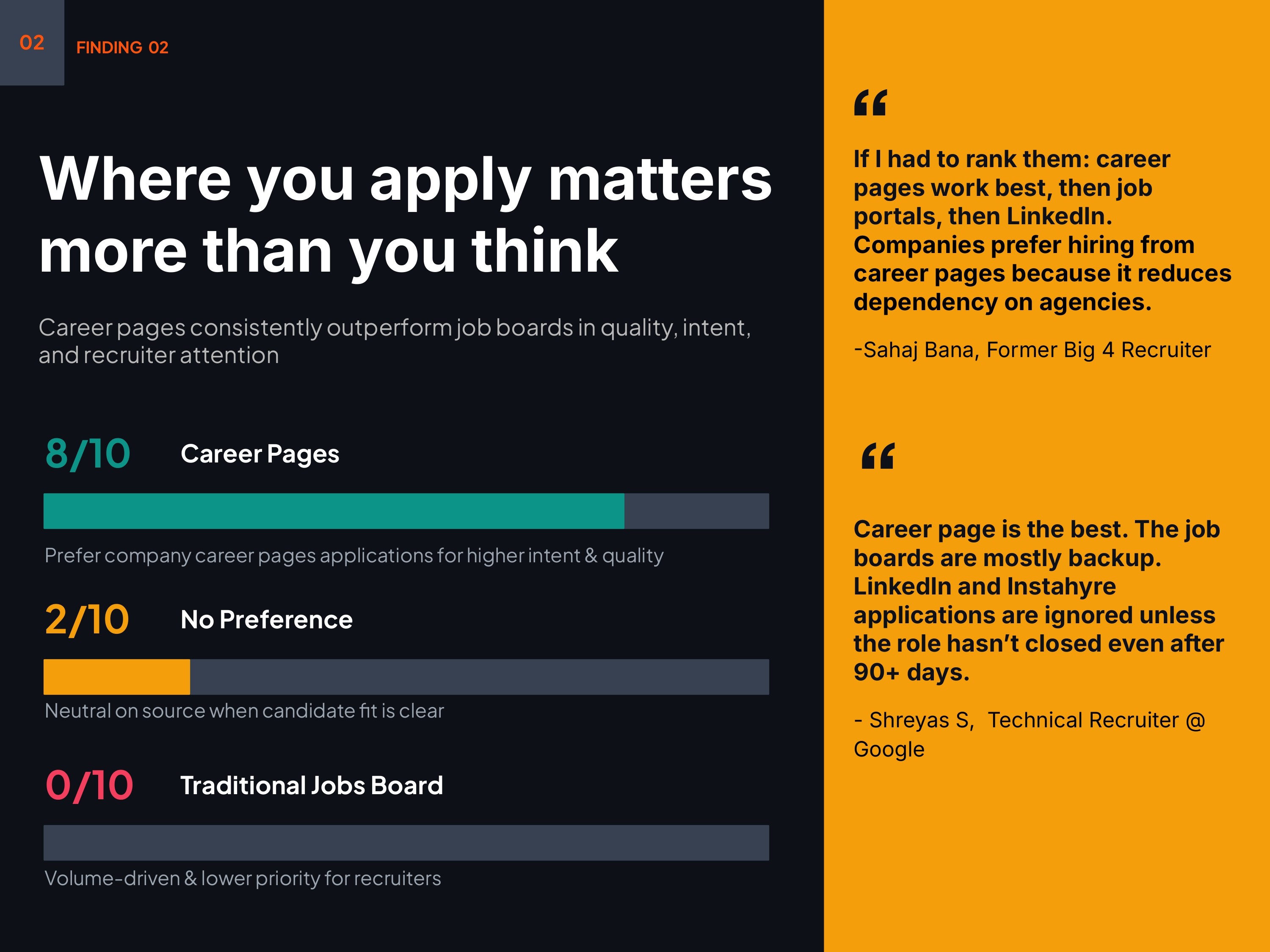
Another major takeaway was that company career pages consistently outperform traditional job boards. Recruiters described job boards as high-volume channels with lower signal quality, while applications through career pages were viewed as higher intent and often prioritized earlier in the process.
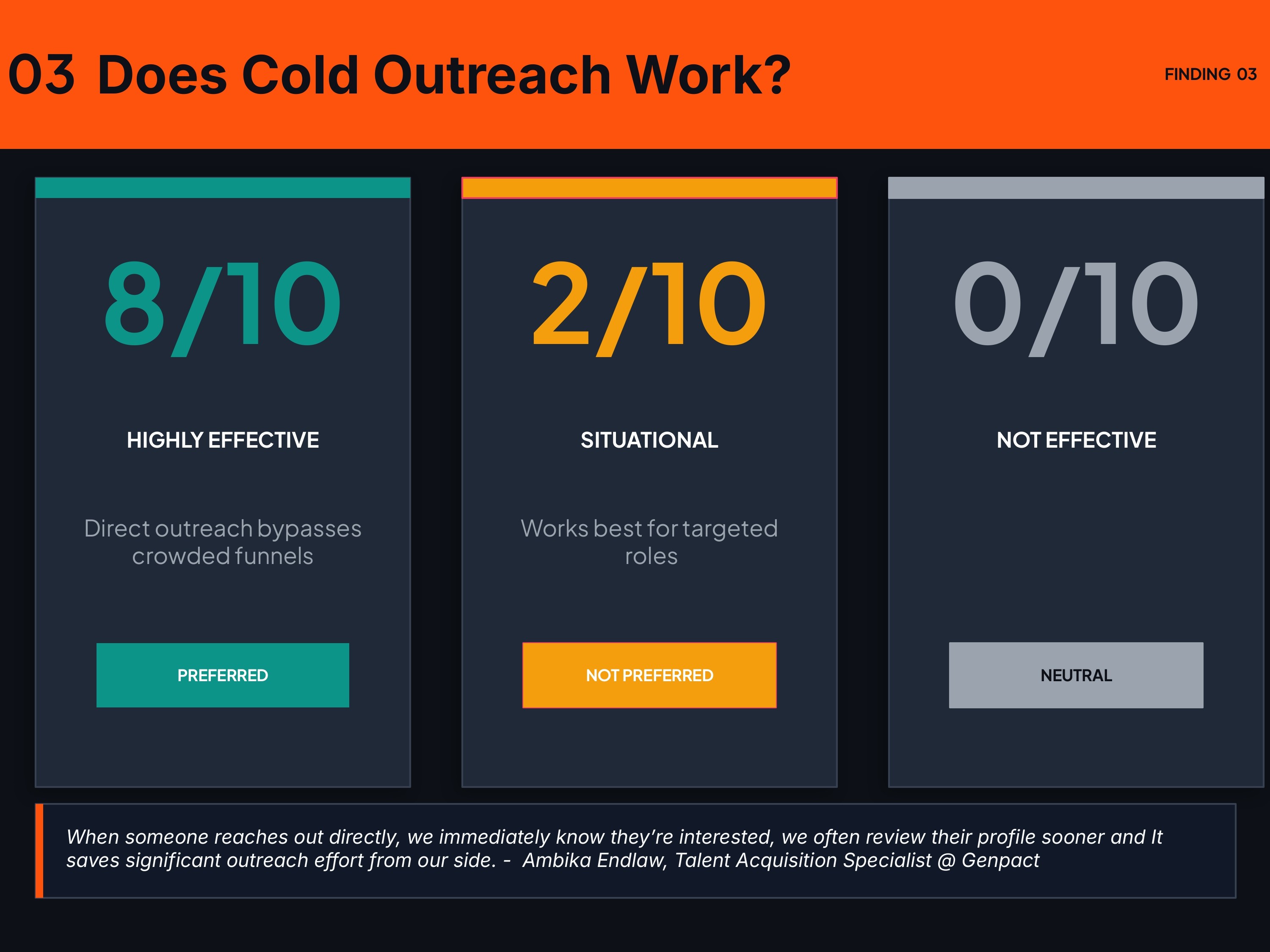
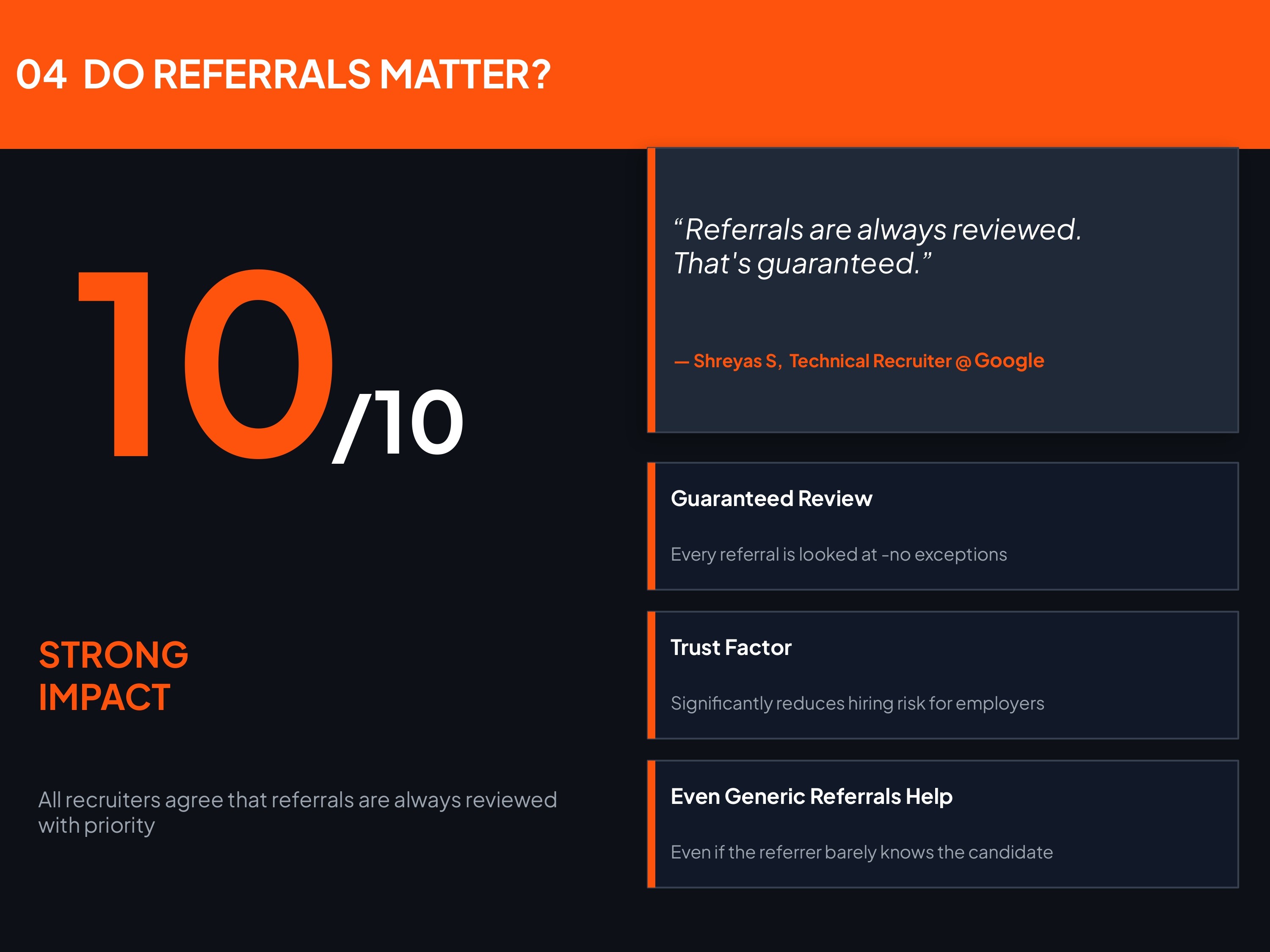
We also found that cold outreach and referrals still matter far more than most candidates realize. Several recruiters said that direct outreach helps candidates bypass crowded funnels entirely, while every recruiter we interviewed agreed that referrals are almost always reviewed with priority.
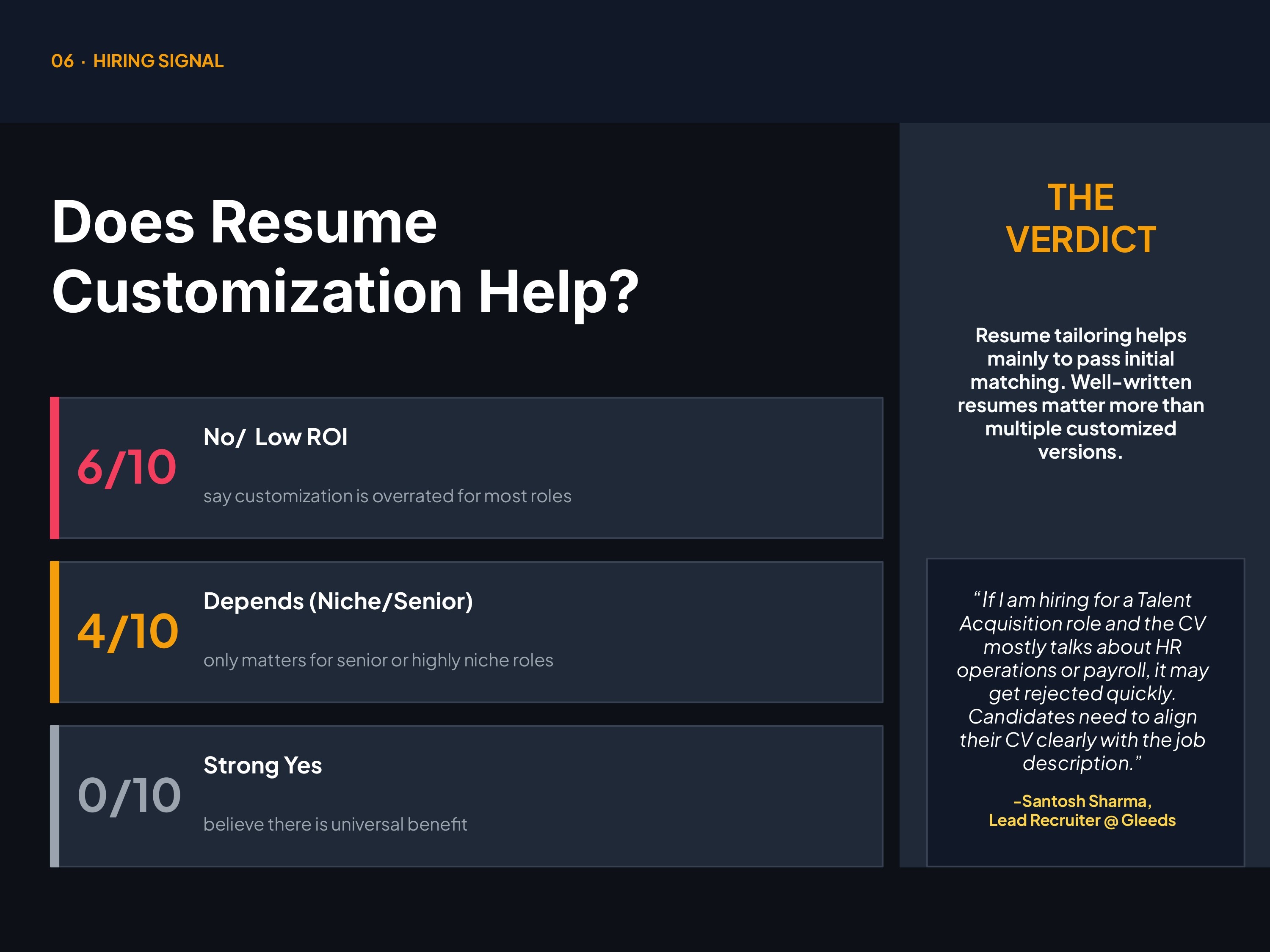
One of the most interesting findings was around resume customization. Contrary to common advice online, most recruiters did not believe candidates should spend excessive time tailoring resumes for every role. Instead, they emphasized having one strong, well-written resume that clearly aligns with the role being applied for.
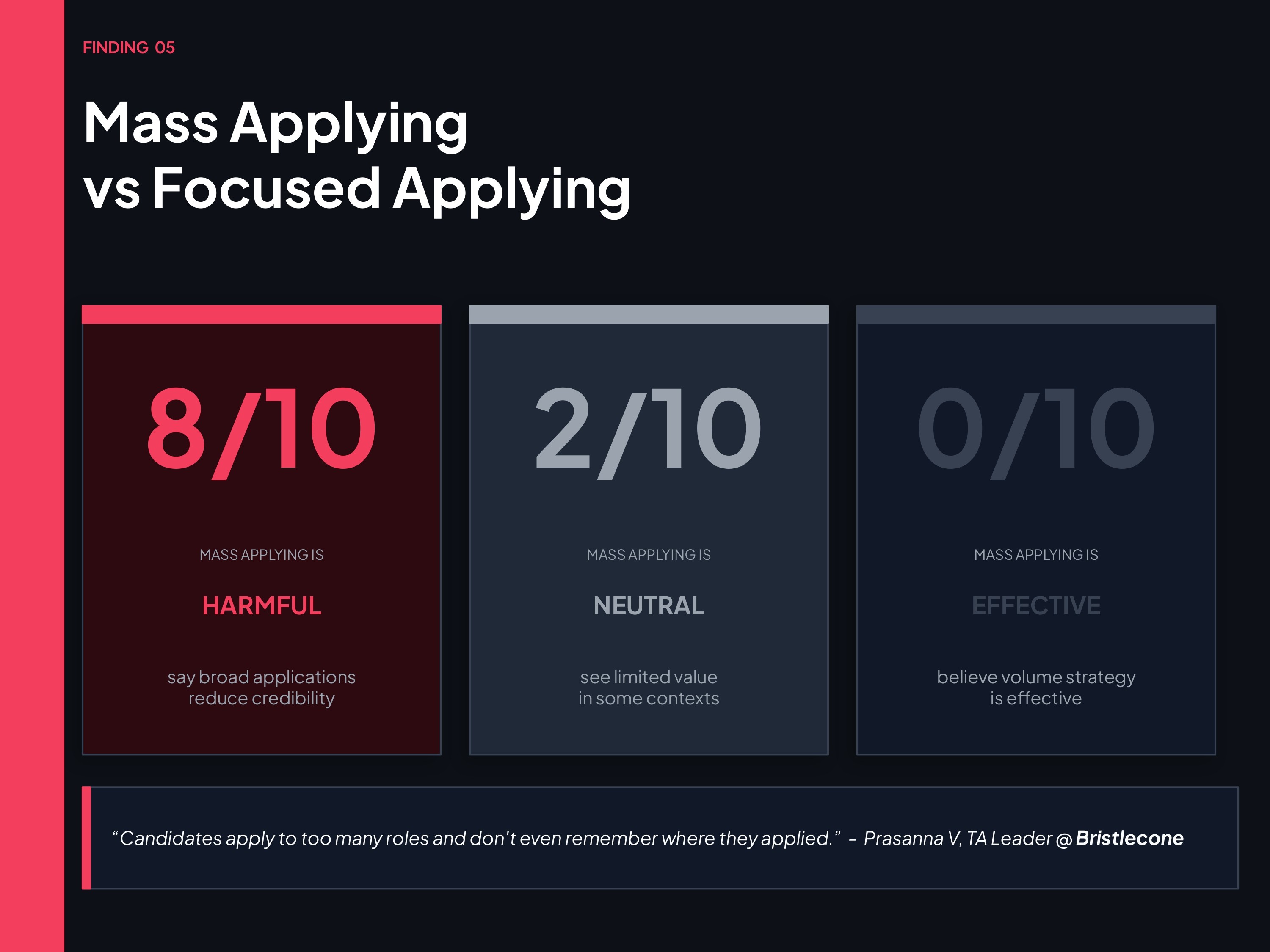
Finally, recruiters strongly pushed back against mass applying. Broad, unfocused applications were often seen as a negative signal rather than a positive one. Recruiters consistently preferred candidates who applied selectively and demonstrated stronger alignment with the role.
The full report below breaks down all six insights in detail, along with direct recruiter quotes and findings from our conversations.